Erewash Heat Risk

Share Erewash Heat Risk on Facebook Share Erewash Heat Risk on X (formerly Twitter) Share Erewash Heat Risk on Linkedin Email Erewash Heat Risk link

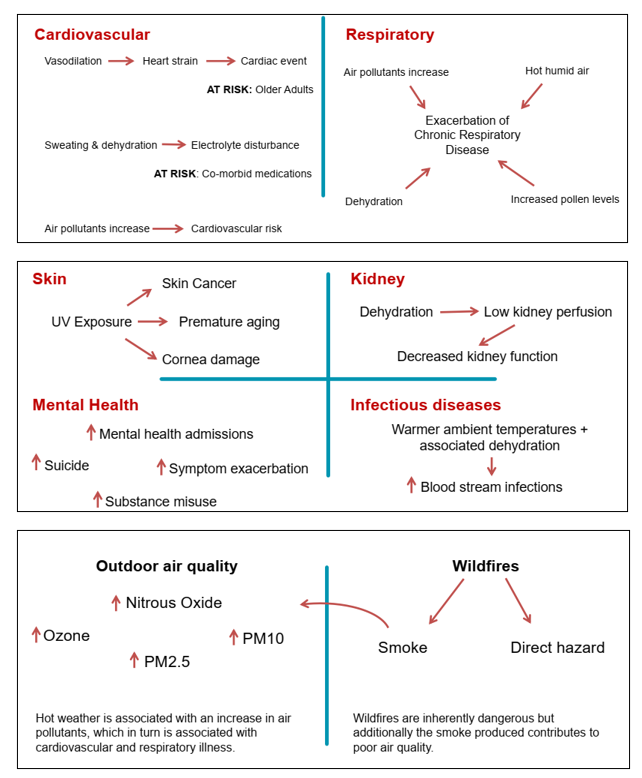
In the UK a heatwave is declared when temperatures above 25oC are expected over 3 or more days with little nighttime relief. When there are shorter extreme spikes in temperature, or the heatwave extends for a longer period this is referred to as a heat episode. This can include daytime spikes even when nighttime temperatures are cool enough to recover. These instances can cause risk to health and impact our ability to function.

It is not just the air temperature that needs to be considered but the relative humidity too. When relative humidity reaches 100% the evaporation stops and the human body can no longer cool itself by sweating. This is referred to as the wet bulb temperature. High heat with dry air can be tolerated, but high heat in high humidity can cause dangerous levels of heat stress.

Health Risk

Symptoms

How to Help

Dehydration – when your body loses more water than it takes in.

dry mouth; dizziness and confusion; headache; reduction in/ dark urine

Drink plenty of water and avoid alcohol and caffeine (they make dehydration worse)

Heat exhaustion – caused by excessive sweating resulting in a loss of body fluids and salts.

Dizziness and confusion; headache; sweating and having pale, clammy or cool skin; feeling nauseous; stomach, leg or arm cramps; rapid pulse and breathing.

Help the person to a cool place where they can rest lying down with their legs raised. Give them plenty of water + isotonic drinks if available. Seek medical advice. If their condition worsens call 999.

Heatstroke – when the body temperature becomes dangerously high and the body is unable to cool itself. Often due to prolonged exposure to heat.

Hot, flushed and dry skin; headaches, dizziness or feeling confused and/or restless; rapidly worsening condition leading to being unresponsive; body temperature over 40oC.

Call 999 immediately. Quickly move them to a cool environment and remove outer clothing. Loosely wrap the person in cold damp clothes or a sheet. Continuously pour cold water over them. Keep cooling them while waiting for help to arrive. If their temperature returns to normal and they no longer feel hot to touch, top cooling them, replace the wet sheet with a dry one and help them to rest.

Sunburn – skin damage caused by too much sun exposure

Red and painful skin

Move into the shade, drink sips of water and cool the affected skin with cold water, calamine or after-sun lotion.

Hay fever – allergic reaction cause by high pollen levels. Warm, sunny weather can increase pollen levels in the air.

Sneezing; itchy eyes; runny nose.

Most symptoms can be treated with antihistamines. You can also wear wraparound sunglasses to keep pollen out of the eyes, shower and change after being outside, or remain indoors.


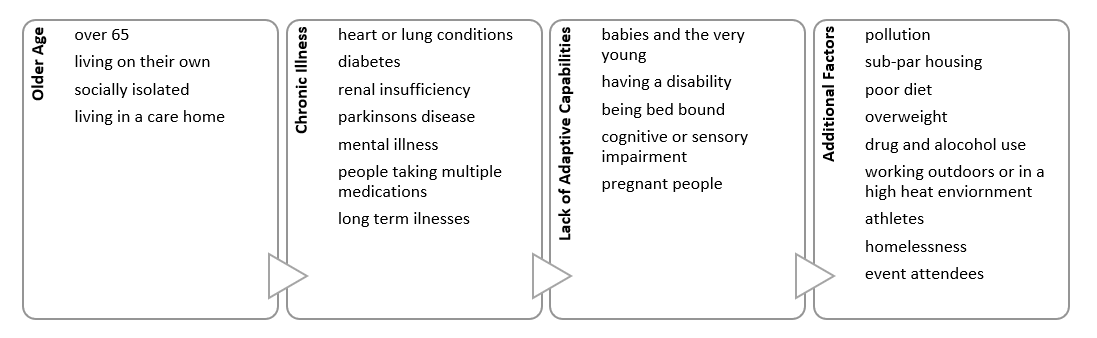
Everybody can be affected by high temperatures, but there are certain factors that increase an individual's risk during a heat wave. These include:

Current climate modelling puts the world on course for 2oC of warming by 2050 and up to 4oC by 2100. With this the UK will see more extreme heat episodes and heatwaves. Extreme heat is one of the fastest-growing climate risks facing people living and working in UK towns and cities. Recent summers have repeatedly broken national temperature records, with 2022 marking the first time the UK exceeded 40°C, causing over 3,300 excess deaths from heat in England and Wales. Hot conditions are no longer unusual; climate change is making them more frequent, more intense and more harmful. Without adaptation annual heat-related deaths could triple. The UK’s future climate is expected to bring hotter summers, more frequent and intense heatwaves, and warmer nights.

Public guidance from the government is provided in the beat the heat campaign. This includes an overview, a keep cool at home checklist, and poster. The Met Office also provides information to ensure we are Weather Ready. This covers preparing for summer, tips for keeping cool in hot weather and tips for staying safe in a thunderstorm. Additional information is provided by the NHS on heat exhaustion and heatstroke, and suncream and sun safety. Further guidance on preparing for extreme weather and storm conditions can be found on the Prepare UK website and the Local Resilience Forum Derbyshire Prepared. Moreover, the UK Health Security Agency (UKHSA) data dashboard provides regularly updated information and alerts for various health issues. This includes weather and climate risks. Heat health alerts are rated as follows with specific actions recommended for each alert level.


In hot weather many are tempted to go into cold water. While there is no concern through slow immersion, jumping into water considerably cooler than the air temperature can cause shock.

Anything below 15°C is defined as cold water and can seriously affect your breathing and movement, so the risk is significant most of the year. Average UK and Ireland sea temperatures are just 12°C. Rivers such as the Thames are colder - even in the summer.

Cold water shock causes the blood vessels in the skin to close, which increases the resistance of blood flow. Heart rate is also increased. As a result, the heart has to work harder, and your blood pressure goes up. Cold water shock can therefore cause heart attacks, even in the relatively young and healthy. The sudden cooling of the skin by cold water also causes an involuntary gasp for breath. Breathing rates can change uncontrollably, sometimes increasing as much as tenfold. All these responses contribute to a feeling of panic, increasing the chance of inhaling water directly into the lungs.

The RNLI advice is:

If you enter the water unexpectedly:

If you’re planning on enjoying the water:

Take a minute to breathe. The initial effects of cold-water pass in less than 1 minute, so don’t try to swim straight away. Relax & Float to Live. Keep calm then call for help or swim for safety if you’re able.


Even strong swimmers can get into difficulty.

Check conditions, including the water temperature. Wear appropriate wet suits or alternative water sports clothing. A swimsuit or shorts and t-shirt are not sufficient. Wear a flotation device. It greatly increases your chances of making it through the initial shock. See guidance on lifejackets and buoyancy aids (PDF 3.3MB).


Personal Measures:

Cover up with suitable clothing, hats and accredited sunglasses. Take care not to burn, but if you do, use aftersun and stay out of the sun until all redness is gone. Use at least factor 30 suncream, 4* UVA minimum. Stay in the shade 11-3pm on very hot days. Use water-resistant sun cream for pools and the sea. Take extra care is you have pale skin, red or fair hair, freckles, tend to burn easily, have many moles, are not exposed to intense sun often, have a family history of skin cancer, or are in a particularly high UV factor country. Avoid exercise, high stress or exertion in 30 degrees +, or 25 if vulnerable. Have cold food and drink. Use a damp flannel to keep cool. Close windows and curtains during the middle of the day (when if is hotter outside than inside).

For Our Pets:

Make sure all pets always have access to fresh water to drink, adequate ventilation, and shade from direct sunlight. Don't exercise dogs in the hottest parts of the day, especially older pets, flat-faced breeds or dogs with known heart or lung problems. Stick to early morning or late evening walks. Do the 5-second tarmac test before taking a dog out for a walk; if it feels too hot for you, it's too hot for your dogs paws. Make frozen treats for your pets. Some breeds of cats and dogs, particularly those with lighter-coloured fur, may benefit from pet-safe sun cream, especially on the ear tips. Keep bowls of water for wildlife such as birds and hedgehogs. Watch out for early signs of heatstroke, such as heavy panting, restlessness and lack of coordination. Contact a vet immediately if you have any concerns.

Elderly (over 65)

Wear cool, lightweight, breathable fabrics ensure bedding and seating are equally breathable and cool. Consider prescription sunglasses or transition lenses to protect your eyes. Protect the neck and upper back as well as the head with a light scarf or wide brimmed hat. Avoid excessively cold drinks as they can shock the system. Know how your and others' medications can increase heat risk (i.e. anticholingenics, vasoconstrictors, antihistimines, drugs that reduce renal function, diuretics, antihypertensives, and some anti-depressants). Maintain good hygiene and drink plenty of water.

The Pregnant & The Young:


Pregnancy

Extreme heat risks – dehydration, heat exhaustion, heat stroke, reduction in flow of blood between the placenta and baby, an inflammatory response which may trigger pre-term birth. Follow all heat health advice due to the increased stress on your body.

Melasma (pregnancy mask) - extra pigmentation caused by hormonal changes on cheeks, forehead, upper lip, nose and chin. Can also affect those on birth control pills and hormone replacement therapy. Avoid UV radiation, sunbeds and phototherapy + use min 30SPF suncream with a high UV rating and wear a wide brimmed hat.

Hydration

Fun colourful water bottles + fruit infused water. Regular fluids and lollies/ watery fruit. Avoid sugary or caffeinated drinks which can worsen dehydration. Cold foods + fruit and salad to maintain hydration. Undiluted fruit juice or smoothies should not be given to children until 5 years.

Cooling

Keep curtains shut during the day. Cool spaces for children, provide shade in parks and playgrounds. Water play – fountains, paddling pools,

Sleep

Lukewarm baths before bed to aid with sleeping. Never use lose bedding for babies and young children – they can become trapped. Lightweight sleeping bags or just night clothes or nappy only. Keep bedrooms between 16-20oC

Sun Safety

Water safe child’s suncream. Apply suncream 30 mins before exposure + every 2 hours, + immediately after swimming. During heatwaves (especially 30+) keep children indoors or in the shade between 11 and 3. Never leave children alone in cars – on a 22oC day temperature inside a car can reach 47oC in just 60 mins – not even for a quick errand. Lightweight, loose fitting clothes + wide brimmed hats. Keep infants under 6 months in the shade. Use pram sunshades indoors and outdoors -Never cover a pram or pushchair completely with blankets or muslins – create an oven effect.

School & Sports

School uniforms should be relaxed in heatwaves/ in heat episodes. If your child has health conditions that make them more vulnerable – ask the school about their heatwave procedures. On 30+ days the Department of Health and Social Care recommends children should not take part in vigorous physical activity – sports club activities and PE lessons should be adapted accordingly.

Awareness

Irritable, restless etc. might be heat exhaustion rather than naughtiness.

Know the signs and what to do.


Disabled and/or Long Term Ill:


Fire Pits & Candles: Avoid open flames in parks and open land: Dry grass and vegetation can ignite in seconds, and fires spread rapidly in warm, windy conditions. Report smoke or fire immediately: Quick reporting helps prevent small fires from escalating into large-scale incidents.

Cigarettes: Dispose of cigarettes responsibly: Ensure cigarettes are fully extinguished and placed in a suitable bin (i.e. sand buckets).

BBQs

  • Keep ignition sources away from vegetation: Matches, lighters and disposable barbecues can all cause accidental ignition if handled carelessly.
  • Ensure water and/or fire extinguishers are available nearby.
  • Use barbecues only in designated areas: Never place barbecues directly on grass, woodland or other flammable surfaces. Use a stable, non-flammable base. Position barbecues safely: Keep them well away from tents, fences, sheds and overhanging trees. Never leave a barbecue unattended: Hot embers can blow into dry vegetation, and a moment’s distraction is enough for a fire to take hold.
  • Check wind direction before lighting: Even a light breeze can carry sparks into surrounding grass or woodland.
  • Fully extinguish barbecues after use: Allow coals to cool completely before moving or disposing of them. Hot embers can stay warm for hours and may reignite.

Did you know that you can sign up for email news updates from the council? Subscribe by clicking this link.


In the UK a heatwave is declared when temperatures above 25oC are expected over 3 or more days with little nighttime relief. When there are shorter extreme spikes in temperature, or the heatwave extends for a longer period this is referred to as a heat episode. This can include daytime spikes even when nighttime temperatures are cool enough to recover. These instances can cause risk to health and impact our ability to function.

It is not just the air temperature that needs to be considered but the relative humidity too. When relative humidity reaches 100% the evaporation stops and the human body can no longer cool itself by sweating. This is referred to as the wet bulb temperature. High heat with dry air can be tolerated, but high heat in high humidity can cause dangerous levels of heat stress.

Health Risk

Symptoms

How to Help

Dehydration – when your body loses more water than it takes in.

dry mouth; dizziness and confusion; headache; reduction in/ dark urine

Drink plenty of water and avoid alcohol and caffeine (they make dehydration worse)

Heat exhaustion – caused by excessive sweating resulting in a loss of body fluids and salts.

Dizziness and confusion; headache; sweating and having pale, clammy or cool skin; feeling nauseous; stomach, leg or arm cramps; rapid pulse and breathing.

Help the person to a cool place where they can rest lying down with their legs raised. Give them plenty of water + isotonic drinks if available. Seek medical advice. If their condition worsens call 999.

Heatstroke – when the body temperature becomes dangerously high and the body is unable to cool itself. Often due to prolonged exposure to heat.

Hot, flushed and dry skin; headaches, dizziness or feeling confused and/or restless; rapidly worsening condition leading to being unresponsive; body temperature over 40oC.

Call 999 immediately. Quickly move them to a cool environment and remove outer clothing. Loosely wrap the person in cold damp clothes or a sheet. Continuously pour cold water over them. Keep cooling them while waiting for help to arrive. If their temperature returns to normal and they no longer feel hot to touch, top cooling them, replace the wet sheet with a dry one and help them to rest.

Sunburn – skin damage caused by too much sun exposure

Red and painful skin

Move into the shade, drink sips of water and cool the affected skin with cold water, calamine or after-sun lotion.

Hay fever – allergic reaction cause by high pollen levels. Warm, sunny weather can increase pollen levels in the air.

Sneezing; itchy eyes; runny nose.

Most symptoms can be treated with antihistamines. You can also wear wraparound sunglasses to keep pollen out of the eyes, shower and change after being outside, or remain indoors.


Everybody can be affected by high temperatures, but there are certain factors that increase an individual's risk during a heat wave. These include:


Current climate modelling puts the world on course for 2oC of warming by 2050 and up to 4oC by 2100. With this the UK will see more extreme heat episodes and heatwaves. Extreme heat is one of the fastest-growing climate risks facing people living and working in UK towns and cities. Recent summers have repeatedly broken national temperature records, with 2022 marking the first time the UK exceeded 40°C, causing over 3,300 excess deaths from heat in England and Wales. Hot conditions are no longer unusual; climate change is making them more frequent, more intense and more harmful. Without adaptation annual heat-related deaths could triple. The UK’s future climate is expected to bring hotter summers, more frequent and intense heatwaves, and warmer nights.

Public guidance from the government is provided in the beat the heat campaign. This includes an overview, a keep cool at home checklist, and poster. The Met Office also provides information to ensure we are Weather Ready. This covers preparing for summer, tips for keeping cool in hot weather and tips for staying safe in a thunderstorm. Additional information is provided by the NHS on heat exhaustion and heatstroke, and suncream and sun safety. Further guidance on preparing for extreme weather and storm conditions can be found on the Prepare UK website and the Local Resilience Forum Derbyshire Prepared. Moreover, the UK Health Security Agency (UKHSA) data dashboard provides regularly updated information and alerts for various health issues. This includes weather and climate risks. Heat health alerts are rated as follows with specific actions recommended for each alert level.


In hot weather many are tempted to go into cold water. While there is no concern through slow immersion, jumping into water considerably cooler than the air temperature can cause shock.

Anything below 15°C is defined as cold water and can seriously affect your breathing and movement, so the risk is significant most of the year. Average UK and Ireland sea temperatures are just 12°C. Rivers such as the Thames are colder - even in the summer.

Cold water shock causes the blood vessels in the skin to close, which increases the resistance of blood flow. Heart rate is also increased. As a result, the heart has to work harder, and your blood pressure goes up. Cold water shock can therefore cause heart attacks, even in the relatively young and healthy. The sudden cooling of the skin by cold water also causes an involuntary gasp for breath. Breathing rates can change uncontrollably, sometimes increasing as much as tenfold. All these responses contribute to a feeling of panic, increasing the chance of inhaling water directly into the lungs.

The RNLI advice is:

If you enter the water unexpectedly:

If you’re planning on enjoying the water:

Take a minute to breathe. The initial effects of cold-water pass in less than 1 minute, so don’t try to swim straight away. Relax & Float to Live. Keep calm then call for help or swim for safety if you’re able.


Even strong swimmers can get into difficulty.

Check conditions, including the water temperature. Wear appropriate wet suits or alternative water sports clothing. A swimsuit or shorts and t-shirt are not sufficient. Wear a flotation device. It greatly increases your chances of making it through the initial shock. See guidance on lifejackets and buoyancy aids (PDF 3.3MB).


Personal Measures:

Cover up with suitable clothing, hats and accredited sunglasses. Take care not to burn, but if you do, use aftersun and stay out of the sun until all redness is gone. Use at least factor 30 suncream, 4* UVA minimum. Stay in the shade 11-3pm on very hot days. Use water-resistant sun cream for pools and the sea. Take extra care is you have pale skin, red or fair hair, freckles, tend to burn easily, have many moles, are not exposed to intense sun often, have a family history of skin cancer, or are in a particularly high UV factor country. Avoid exercise, high stress or exertion in 30 degrees +, or 25 if vulnerable. Have cold food and drink. Use a damp flannel to keep cool. Close windows and curtains during the middle of the day (when if is hotter outside than inside).

For Our Pets:

Make sure all pets always have access to fresh water to drink, adequate ventilation, and shade from direct sunlight. Don't exercise dogs in the hottest parts of the day, especially older pets, flat-faced breeds or dogs with known heart or lung problems. Stick to early morning or late evening walks. Do the 5-second tarmac test before taking a dog out for a walk; if it feels too hot for you, it's too hot for your dogs paws. Make frozen treats for your pets. Some breeds of cats and dogs, particularly those with lighter-coloured fur, may benefit from pet-safe sun cream, especially on the ear tips. Keep bowls of water for wildlife such as birds and hedgehogs. Watch out for early signs of heatstroke, such as heavy panting, restlessness and lack of coordination. Contact a vet immediately if you have any concerns.

Elderly (over 65)

Wear cool, lightweight, breathable fabrics ensure bedding and seating are equally breathable and cool. Consider prescription sunglasses or transition lenses to protect your eyes. Protect the neck and upper back as well as the head with a light scarf or wide brimmed hat. Avoid excessively cold drinks as they can shock the system. Know how your and others' medications can increase heat risk (i.e. anticholingenics, vasoconstrictors, antihistimines, drugs that reduce renal function, diuretics, antihypertensives, and some anti-depressants). Maintain good hygiene and drink plenty of water.

The Pregnant & The Young:


Pregnancy

Extreme heat risks – dehydration, heat exhaustion, heat stroke, reduction in flow of blood between the placenta and baby, an inflammatory response which may trigger pre-term birth. Follow all heat health advice due to the increased stress on your body.

Melasma (pregnancy mask) - extra pigmentation caused by hormonal changes on cheeks, forehead, upper lip, nose and chin. Can also affect those on birth control pills and hormone replacement therapy. Avoid UV radiation, sunbeds and phototherapy + use min 30SPF suncream with a high UV rating and wear a wide brimmed hat.

Hydration

Fun colourful water bottles + fruit infused water. Regular fluids and lollies/ watery fruit. Avoid sugary or caffeinated drinks which can worsen dehydration. Cold foods + fruit and salad to maintain hydration. Undiluted fruit juice or smoothies should not be given to children until 5 years.

Cooling

Keep curtains shut during the day. Cool spaces for children, provide shade in parks and playgrounds. Water play – fountains, paddling pools,

Sleep

Lukewarm baths before bed to aid with sleeping. Never use lose bedding for babies and young children – they can become trapped. Lightweight sleeping bags or just night clothes or nappy only. Keep bedrooms between 16-20oC

Sun Safety

Water safe child’s suncream. Apply suncream 30 mins before exposure + every 2 hours, + immediately after swimming. During heatwaves (especially 30+) keep children indoors or in the shade between 11 and 3. Never leave children alone in cars – on a 22oC day temperature inside a car can reach 47oC in just 60 mins – not even for a quick errand. Lightweight, loose fitting clothes + wide brimmed hats. Keep infants under 6 months in the shade. Use pram sunshades indoors and outdoors -Never cover a pram or pushchair completely with blankets or muslins – create an oven effect.

School & Sports

School uniforms should be relaxed in heatwaves/ in heat episodes. If your child has health conditions that make them more vulnerable – ask the school about their heatwave procedures. On 30+ days the Department of Health and Social Care recommends children should not take part in vigorous physical activity – sports club activities and PE lessons should be adapted accordingly.

Awareness

Irritable, restless etc. might be heat exhaustion rather than naughtiness.

Know the signs and what to do.


Disabled and/or Long Term Ill:


Fire Pits & Candles: Avoid open flames in parks and open land: Dry grass and vegetation can ignite in seconds, and fires spread rapidly in warm, windy conditions. Report smoke or fire immediately: Quick reporting helps prevent small fires from escalating into large-scale incidents.

Cigarettes: Dispose of cigarettes responsibly: Ensure cigarettes are fully extinguished and placed in a suitable bin (i.e. sand buckets).

BBQs

  • Keep ignition sources away from vegetation: Matches, lighters and disposable barbecues can all cause accidental ignition if handled carelessly.
  • Ensure water and/or fire extinguishers are available nearby.
  • Use barbecues only in designated areas: Never place barbecues directly on grass, woodland or other flammable surfaces. Use a stable, non-flammable base. Position barbecues safely: Keep them well away from tents, fences, sheds and overhanging trees. Never leave a barbecue unattended: Hot embers can blow into dry vegetation, and a moment’s distraction is enough for a fire to take hold.
  • Check wind direction before lighting: Even a light breeze can carry sparks into surrounding grass or woodland.
  • Fully extinguish barbecues after use: Allow coals to cool completely before moving or disposing of them. Hot embers can stay warm for hours and may reignite.

Did you know that you can sign up for email news updates from the council? Subscribe by clicking this link.


Page last updated: 23 Jul 2026, 03:07 PM